Breathing room isn’t a luxury. It’s a competitive advantage.
TL;DR: Most business owners believe the path to greater success is working harder, staying busier, and squeezing every ounce of productivity out of themselves and their teams. The evidence says breathing room isn't wasted time—it's one of your greatest competitive advantages. When businesses intentionally build breathing room into the way they operate, they create more value. Because, that extra capacity leads to better thinking, better decisions, stronger resilience, continuous improvement, and ultimately a healthier, more profitable business that's easier to run, easier to scale, and more valuable to sell.

When your days are filled to the brim, a vacation or even a proper lunch break away from your desk can feel irresponsible.
The logical response is to push harder—to move faster and do more. But when you step back and look at the numbers, a strange contradiction emerges.
Despite pouring more time and energy into the business, profits are flat, turnover is on the rise, and every ounce of effort produces less progress than it did before.
It doesn't make sense. Hard work is what got you this far. So why, when you're working harder than ever, do freedom and wealth seem even farther away?
The short answer: because there comes a point where more effort stops creating more value.
Stanford economist John Pencavel proved this in his landmark study, where he looked at the math behind human output. Pencavel discovered that our productivity stays pretty steady up to about 49 hours a week. Past that point, it falls off a steep cliff. In fact, the data showed that a person working 70 hours a week produces the same amount of output as someone working 56 hours.
The cost of busyness isn’t just wasted time; it’s wasted money, too.
The American Journal of Preventive Medicine found that workplace burnout costs employers an average of $4,257 per employee—and $10,824 per manager—each year. Nearly 90% is from "presenteeism": employees showing up exhausted, working below their potential, and making costly mistakes.
That’s why businesses that consistently outperform their competitors don't see breathing room as a luxury. They see it as a competitive advantage.
The Counterintuitive Lever of Business Performance
Breathing room[1], defined as intentionally uncommitted time, has been traditionally viewed as waste or laziness. But in modern, knowledge-based (especially creative) small businesses, zero whitespace equals zero growth.
I know. It sounds completely backward, but sometimes the secret to doing more really is to do less.
Here's why.

01 Better Thinking
Breathing room creates the mental capacity to think clearly. Clear thinking leads to better decisions. Better decisions lead to a stronger, more profitable business.
When every single minute of your day is spoken for, you steal power from your executive functions—the parts of your brain responsible for planning, creativity, and good judgment.
In fact, behavioral economists Sendhil Mullainathan and Eldar Shafir found that when we are short on money or time, our cognitive performance temporarily drops 10 to 13 IQ points. In other words, being overloaded doesn't just make you feel stressed; it literally makes it harder to think.
Lack of breathing room impacts creativity, too. That's why your best ideas often show up in the shower, on a walk, or during the drive home. Research suggests that when your mind has space to wander, your brain is better able to make connections and find solutions.
Forward-thinking companies have been applying these ideas for years—and it's paid off in a big way.
For example, Google gave its engineers "20% time"—one full day a week to “work on what they think will most benefit Google.” That intentional whitespace birthed Gmail, Google News, and AdSense, platforms that now generate billions of dollars.

02 Better Resilience
Breathing room is your business's shock absorber. It helps it bend instead of break when reality doesn't go according to plan, turning potential crises into minor setbacks.
Work, just like life, is imperfect and unpredictable. Projects run long; clients change priorities; people get sick; markets shift. When your business is operating at full capacity, even small disruptions can create a ripple effect of rushed work and missed deadlines, ultimately leading to unhappy customers.
Margin isn't waste. It's what allows systems to keep working when reality refuses to cooperate.
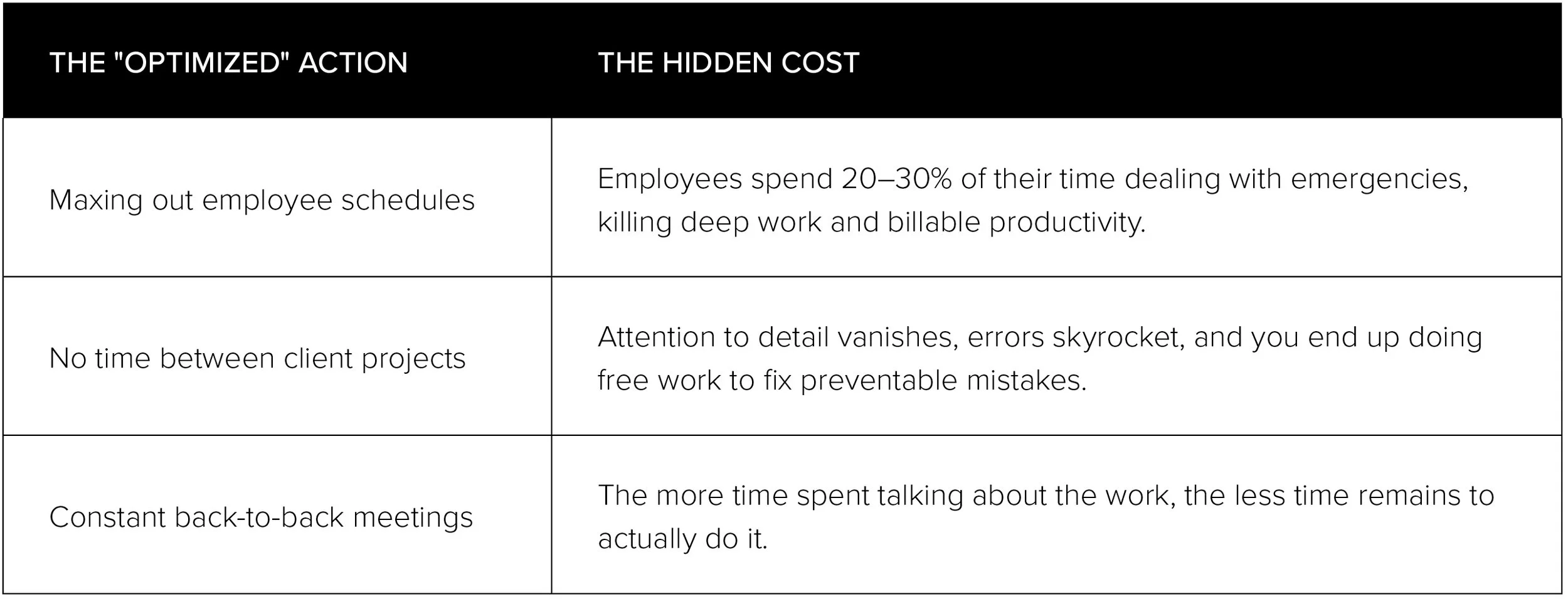
Not only that, organizations that intentionally build breathing room into the way they work consistently outperform those operating at their limits.
4 Day Week Global found that companies reducing working hours by 20% (while maintaining the same pay) experienced a 35% increase in revenue alongside a 71% reduction in employee burnout.

03 A Better Today
Breathing room lets you be the leader instead of the bottleneck. That’s not just better for you; it’s better for your business, too.
When a business is operating at full capacity, every question, problem, and decision lands on your desk. You spend your days reacting to whatever feels most urgent, leaving little time for the work that would actually move the business forward.
But when your team has the breathing room to solve problems and make decisions without your constant involvement, your role begins to change. Instead of putting out fires, you can think strategically, strengthen the business, and prepare it for what's next.
That shift doesn't just create more freedom for you. It creates more value for the business.
Research on more than 6,000 startups found that companies where founders retained excessive control were valued 17% to 22% lower than similar businesses that distributed leadership and decision-making.
Why? Because investors aren't just buying today's profits. They're buying confidence that the business will continue to perform even if the founder steps away.

04 A Better Tomorrow
Breathing room creates space for continuous improvement. Instead of spending every day maintaining what already exists, you can invest in making tomorrow's work easier than today's.
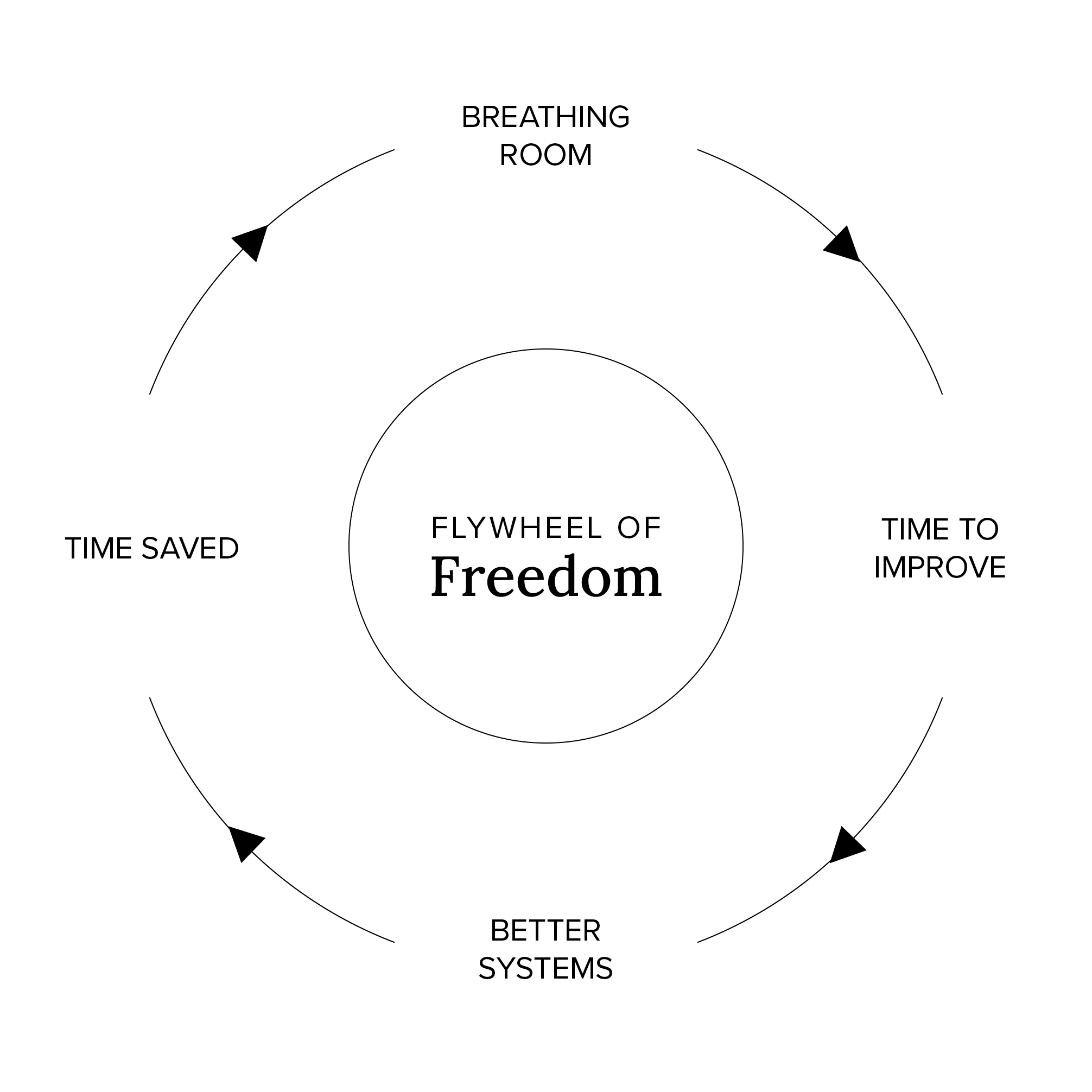
The highest-performing organizations don't simply operate well; they continuously become better at operating.
Without breathing room, every hour is consumed serving clients, answering questions, and racing against deadlines. The work that would actually make the business better gets pushed to "when things slow down." Of course, they never do.
With breathing room, your team has time to step away from the day-to-day and ask, "How do I automate this time-consuming and repetitive task?" or "How do I document this process so someone else can do it when I’m not around?"
Tiny process improvements today save hours next month. Those saved hours create the capacity for the next improvement, which creates even more capacity.
Over time, the gains compound, making your business significantly easier to run and vastly more valuable, while competitors stay trapped in the daily grind.

05 A Better Life
Breathing room doesn't force you to choose between your life and your livelihood. By intentionally designing whitespace into your business, you create something that benefits both.
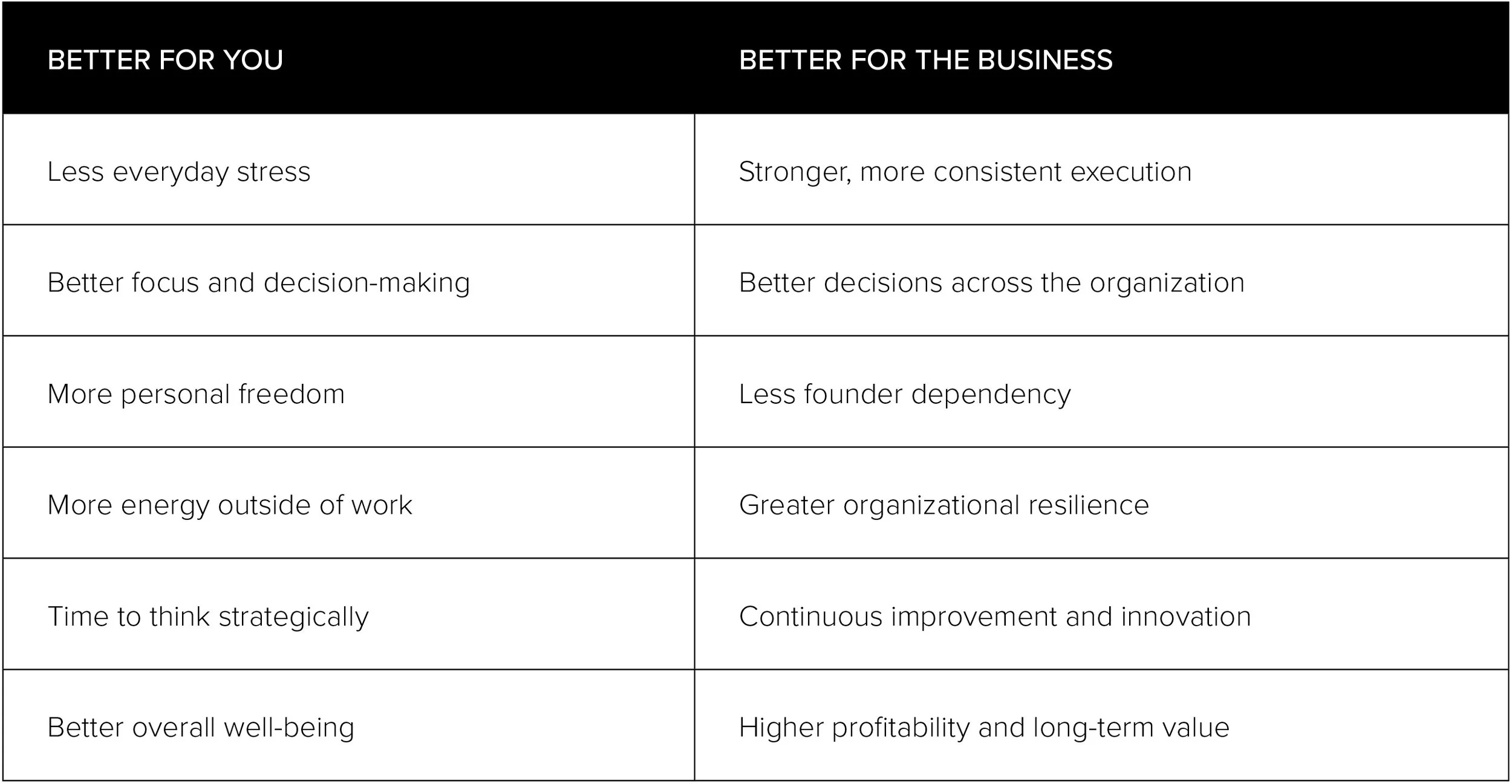
For years, entrepreneurs have been sold the idea that building a valuable business means accepting chronic stress, missed vacations, and a calendar with no space.
But the evidence tells a different story.
The healthiest businesses aren't successful despite taking care of their people. They're successful because they do.
That's because human health and organizational health aren't competing priorities. They're inextricably linked.
The Secret to Sustainable Success
Breathing room doesn't happen by accident. It's the natural outcome of healthy business systems intentionally designed to support the people inside them.
Healthy business systems create the conditions for people to do their best work. When people consistently do their best work, businesses become healthier, perform better, and create greater long-term value.
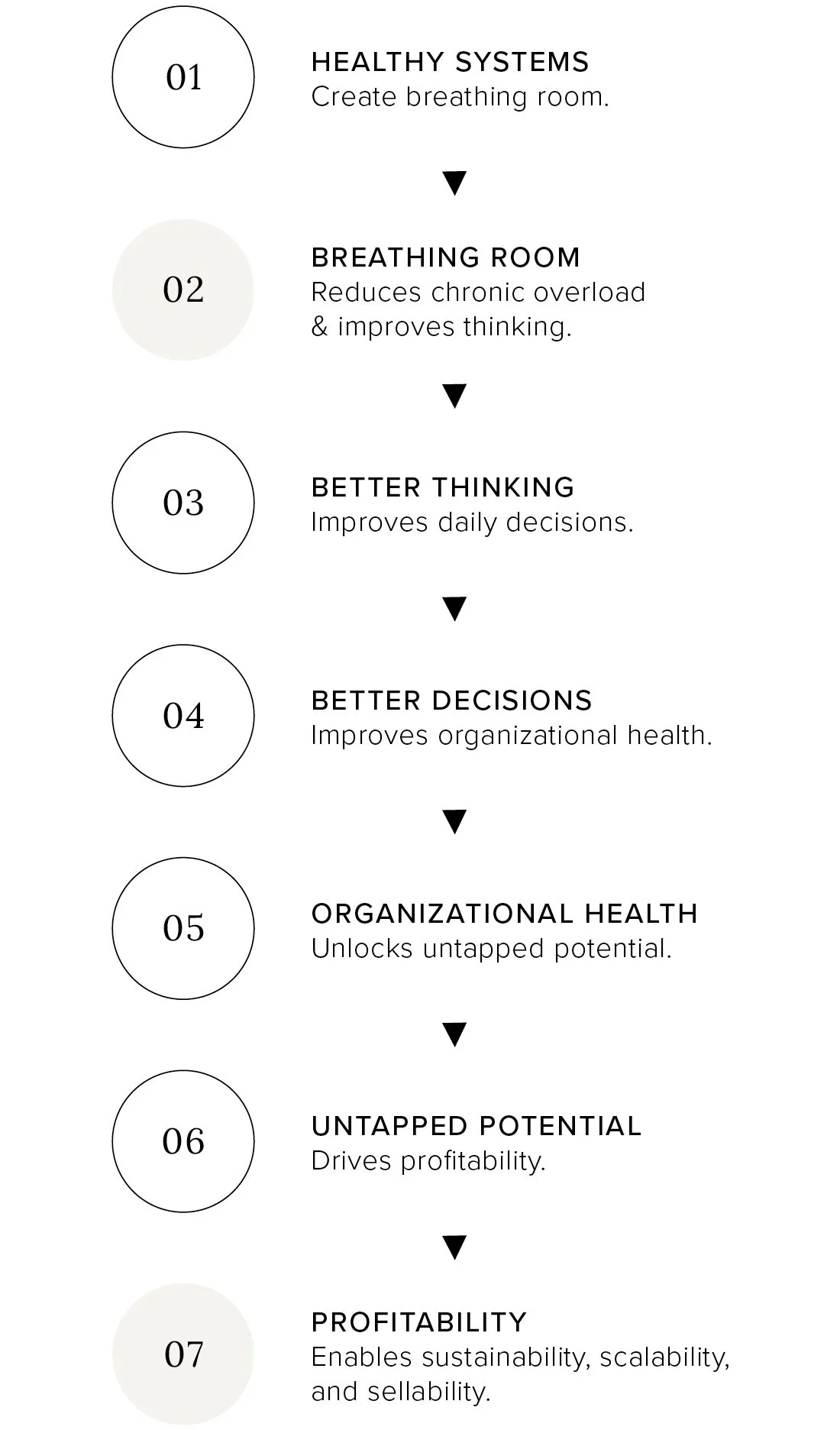
Design Your Business for Health, Wealth, and Happiness
A successful business shouldn't feel heavier every year. It should become healthier, easier to run, and more valuable over time.
If that isn't your experience today, don't work harder. Redesign the way your business works.
At Whitespace, we help business owners build healthier, more valuable businesses by designing the systems that give people the breathing room to think clearly, make better decisions, and focus time, money, and attention where they get the greatest results.
Because healthier business systems create healthier businesses, and healthier businesses create healthier lives.
If you're ready to build a business that's easier to run, more profitable to own, and better prepared for whatever comes next, we'd love to talk.
Schedule a Business Health Strategy Session. Together, we'll identify what's limiting your business's performance and design the healthier systems that turn breathing room into your biggest competitive advantage.
[1] Also called whitespace, margin, or slack.