The Real Problem with Remote Work: It’s Not What You Think.
TL;DR: When actions are visible, it’s easy to assume progress is happening. When it’s not, leaders start looking for signals—fast replies, full calendars, constant availability—to reassure themselves that things are moving. The problem is, those signals are easy to produce and don’t actually say much about whether meaningful work is getting done. So teams stay busy, leaders stay uneasy, and the work that actually requires focus—thinking, problem-solving, making decisions—gets pushed to the margins.
That’s why this shows up more with remote work. Not because people are doing less, but because the usual visual cues disappear. Without them, the gaps in how a business defines and tracks real progress become obvious.
The issue isn’t where people work. It’s whether the business knows how to see and measure the kind of work that actually moves things forward.
In some industries, progress is black and white. A field gets plowed, or it doesn’t. A part gets made, or it doesn’t. Results are visible, measurable, and immediate. You can walk the floor and know exactly where things stand. In a creative agency, someone staring off into space might be procrastinating—or they might be thirty seconds away from the idea that changes everything. It’s hard to know if your team is on task or if they’ve “quietly quit.”

This is especially challenging when the work is remote.
When everyone is in the office, managers can at least see bodies, hear typing, and witness conversations. Remote work doesn’t give those kinds of visual cues, and the manager’s brain worries, “How do I know if work is actually happening?”
So, they create the reassurance they’re missing through the things they can see:
Quick replies.
Full calendars.
Immediate availability.
“Online” indicators.
Busy-ness.
Unfortunately, that approach can come with side effects.
When responsiveness becomes the metric.
-
Meetings have attendance. Agendas. Notes. They create the comforting illusion that something concrete is happening even when the meeting itself doesn’t lead anywhere productive.
-
When your team is expected to act quickly, it’s hard for them to tell the difference between routine questions, time-sensitive issues, and real emergencies. They all land in the same queue: do it now.
-
If you’re always available, your day becomes a sequence of interruptions disguised as “collaboration,” and the meaningful work that would actually create progress repeatedly gets pushed to “later.”
-
For people to do their best work, they need room to focus. In a culture where being unavailable raises eyebrows, deep thinkers get penalized for creating the very conditions their work requires.
Real value is in the work you can’t see.
Deep, uninterrupted thinking is where better ideas show up, better decisions get made, and complex problems actually get solved. That type of work is silent. Invisible. And fragile. Interruptions break it. Meetings fragment it. Constant responsiveness makes it almost impossible.
So when a company measures productivity by responsiveness, it slowly pushes out the deep work that actually moves the business forward.
And when that type of work is pushed out, the company starts to feel less productive.

Remote vs. in-house: what’s actually different.
This is when leadership decides remote work doesn’t work, and everyone gets called back into the office. This way, they can make sure people are working because they can see them working.
But let’s be honest: working in-house doesn’t magically create productivity. A team can sit in the same building all day and still spend most of their time in meetings, answering Slack messages, and reacting to whatever feels urgent in the moment.
So, the better move isn’t forcing everyone back into the office. It’s making the invisible work visible. Because once the organization has a way to see progress that isn’t dependent on eyeballs, leaders stop hovering, and deep work becomes possible again.
Making work visible without turning into a surveillance state.
Some companies have recognized this and tried fixing it with layers of meetings, reporting, and tracking tools that create the appearance of oversight without actually improving anything. That's just a different kind of busy.
What actually works is simpler: make it easy to see what's moving, who owns it, and what's in the way.
Here are some practical building blocks.
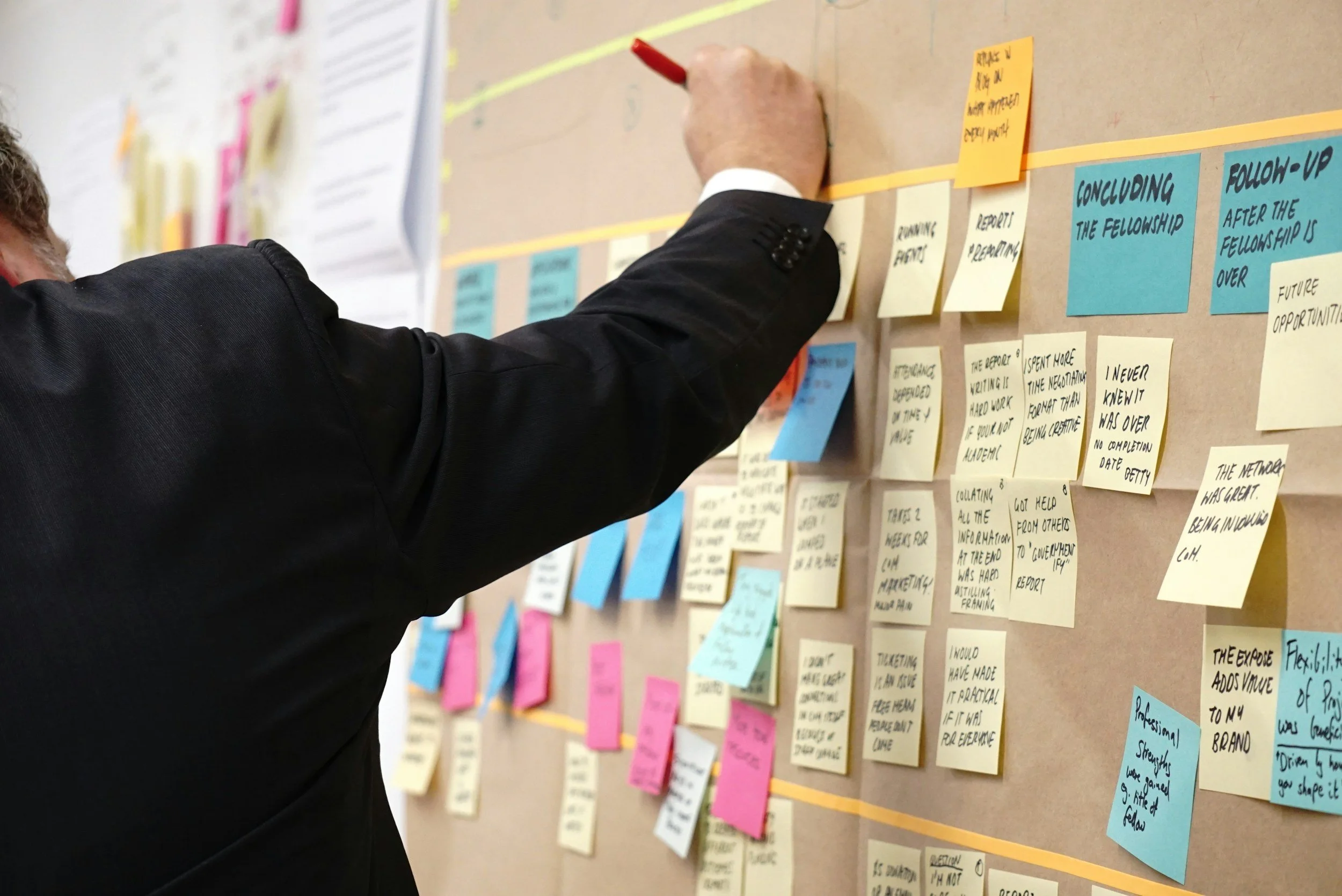
01 Measure output, not activity.
Instead of tracking “who’s on the clock,” track “what’s moving.”
That can be as simple as a weekly or twice-weekly check-in:
What has shipped since the last update?
What’s the next deliverable?
What’s currently stuck, and what is needed to unstick it?
When leaders can see progress, they stop hunting for reassurance.

02 Make ownership obvious.
A shocking amount of interruptions are from ownership confusion. When ownership is unclear, leaders default to the only lever they can pull: “Everyone get on a call.”
Instead, identify:
One place where work status lives.
One owner per deliverable.
One decision-maker per decision type.
You don’t need a fancy tool; you need a single source of truth that isn’t in someone’s head.

03 Define urgency like a grown-up.
Most urgent requests are anxiety, uncertainty, or poor planning, masquerading as “care” and “dedication.”
A simple rule set changes the whole game:
Normal questions: Answered within 1 business day.
Time-sensitive items: Flagged in one channel with a reason and a clear deadline.
True emergencies: Handled through a separate escalation path (call/text), used rarely.
Leaders often fear this will slow work down. In practice, it speeds things up because it stops constant context switching.

04 Protect focus windows.
If the team’s best work requires uninterrupted time, treat that as a core operating requirement, not a personal preference.
That can look like:
No-meeting mornings
Team focus blocks
Predictable “office hours” for questions and conversations
Random availability trains random interruptions. Predictable access reduces them.

05 Make decisions visible.
In many organizations, progress stalls because they don’t know what “approved” looks like or who can say it.
If leaders want confidence that work is happening, they should obsess over decision clarity:
What decisions are needed this week?
Who decides?
By when?
This is one of the fastest ways to reduce both meetings and rework.
Better performance comes from designing the business so people can do good work without spending half their energy proving they’re doing it. Because, when that happens, something important returns to the organization: The space to actually think.

How we can help.
This is the kind of problem Whitespace helps solve. We look at how work is getting done inside the business, then create the operating conditions that support focus, follow-through, and better results.
So, if your team looks busy all day but the business still feels slow, expensive, and hard to run, we’d love to help. Schedule a free 30-minute call at: https://whitespaceconsulting.as.me/free-consult.